
Opinion columns
Decrypting tech communities with Kini
Did you know that, historically, women were pioneers in the tech field? We discovered that and so much more through Kini's opinion column.
View More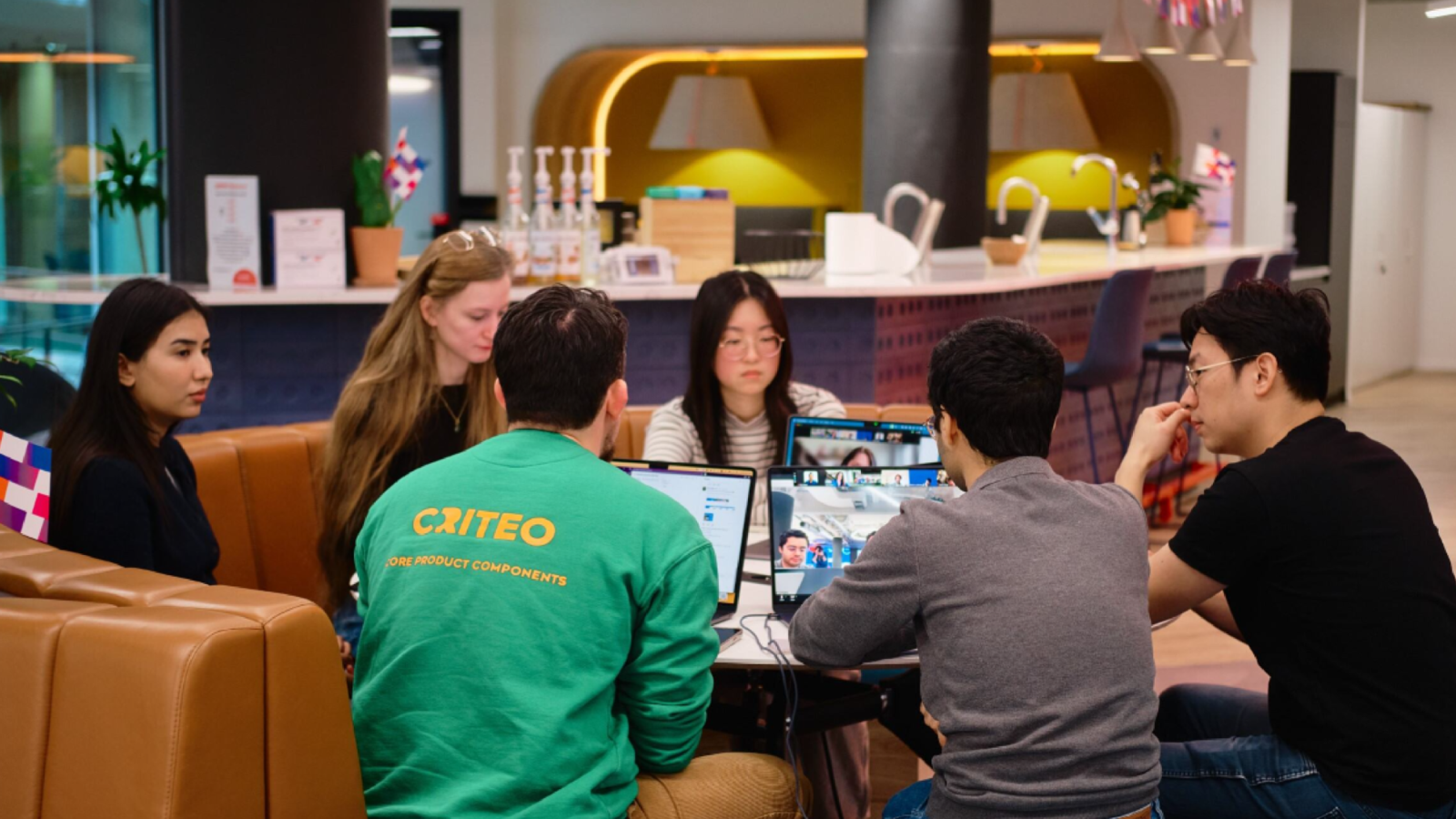
Having a sense of purpose, a perspective for growth, and a sense of belonging is essential in any job. So now, what if communities were the key for companies to foster those fundamental aspects of employee wellbeing all at once?
In today’s article, Head of Developer Relations Kini Engelmo Moriche, reveals the crucial role communities play to enhance tech career growth for all inside and outside of the company. Read on below to discover why tech companies must keep investing in their communities if they want to thrive today and tomorrow.
Communities are what makes you feel part of something bigger, so from a people’s perspective, they give you a sense of belonging and purpose, turning work into something more than “just a job”. Joining a community means being suddenly surrounded by people who speak the same language: they understand your problems, your doubts, and your “I-broke-production-once" stories. Feeling like you belong makes you feel safer and empowered to be who you are, ask “silly” questions, challenge decisions, and, more importantly, admit when you’re stuck. Communities have a positive impact on people’s confidence – in themselves and in others – and as it grows stronger, instant sharing, mentoring, and learning happen more spontaneously.
By making knowledge sharing easier, communities boost overall performance. You can save teams weeks of trial and error, just by sharing your experience in an informal talk, internal session, or conference recap. Learning from others’ experiences and mistakes keeps you from reinventing the wheel, which is a tremendous time saver especially in companies like Criteo where we work on large-scale ML, infra, and platform systems. Creating spaces where we raise the bar together rather than in isolated corners is how we stay sharp in tech.
By nature, tech communities are inherently connected to the outer world, beyond a company’s boundaries. One person might be an internal mentor, but also a conference speaker, and an open‑source maintainer. You have internal groups, guilds, and brown bags, but you also have local meetups, conferences, open‑source projects, and online spaces. There is a constant back-and-forth between the inside and the outside of the company, and that’s what makes tech communities so powerful and unique.
The real challenge here isn’t creating a community; it’s making it relevant in a constantly evolving industry and helping it thrive in the long run.
For that to happen, what you need first is a clear purpose and people who truly care. Then, you need your company’s full support to turn it into something more than extra unpaid work for just a few volunteers. For instance, we defined a clear mission around inspiring, attracting, and developing tech talent through our tech ambassadors for our Tech Community at Criteo. With the company’s support, the community is managed as a real program, not just a hobby. And, finally, you need a clear process to make things run smoothly. You must enhance simple and efficient paths to propose talks and events, publish relevant tech content, and create materials for meetups and conferences. It needs to be structured to be effective, and that’s why we now work with a clear roadmap, a real content strategy, and strong guidelines to empower each person contributing to our community.
You must accept that this is long-term work. It's important to stay flexible and listen to people’s input; what they need and want instead of pushing a fixed plan no matter what. Some months will be busier than others but all in all, making your tech community thrive begins with respecting people’s time and recognizing their commitment.
The first thing is to make your community a safe space the right way, meaning ensuring that everyone feels welcome. If only one part of the contributors is comfortable speaking, writing, or asking questions, the community will always be limited. You learn so much when people open up and share their doubts, failures and unpopular opinions; it’s essential to create the right conditions for those talks to happen. That’s where good ideas and real progress usually start.
The second is fostering an overall culture of sharing. A thriving community is one where it’s normal to share the lessons learned in articles, talks, and so on. At Criteo, we leverage our tech blog to spread knowledge and ensure the great content we share during meetups and other events can live longer through our articles and benefit others.
The third thing you need is to have clear roles, coordination, and support between all stakeholders. You have internal contributors like community builders who host meetups, ambassadors who speak and write, but also contributors from non-tech teams like Talent Acquisition, Employer Branding, Events, DEI, etc.
I think I am living proof of Criteo’s commitment to making tech communities thrive. It is in the company’s culture to value how much community can bring to the table, whatever the area of expertise. Criteo has always seen our Tech Community as a structured space with a real mission, strategy, roadmap, and tangible actions to support it. Our objective is threefold:
It means we have the right kind of support to host many different meetups across our offices worldwide (Paris, Bucharest, Toronto, Grenoble, etc). We sometimes organize them with partners from areas or technologies we are interested in. We also sponsor and speak at conferences like Devoxx France, Snowcamp, Voxxed Days Bucharest, NeurIPS, and many others, with engineers and researchers on stage and booths so that people can meet us and ask their questions.
On the content side, our tech blog is the main outlet to spread knowledge and explain what we do: engineering challenges, open-source projects, research papers, community recaps, and culture pieces. Just in the recent year, we published over fifty articles and ten research papers, hosted dedicated AI events, and continued to expand our presence.
My job as Head of Developer Relations is to connect the dots: support speakers and writers, help community builders with their events, make sure our activities align with our tech brand, and build bridges between internal teams and external communities where collaboration makes sense.
For Criteo, investing in tech communities is tightly linked to how we hire, grow, and retain people. We run a large‑scale commerce intelligence platform, which means heavy ML/AI, data, infra, and platform services. Many of our tech experts are active members of our community at Criteo. Their joint efforts to create great content and share their knowledge play a huge part in attracting and retaining top talents to build strong tech teams.
It also nurtures and strengthens our culture across the globe. We give back to the local communities where our tech hubs are and help make things evolve for everyone in the industry by creating more inclusive tech spaces everywhere. We are social beings so it’s our nature to learn from each other to grow and thrive. All that Criteo does for tech communities is just a reflection of the longstanding tradition of collaboration, innovation, and community that has made our success over the years.
Everything is changing so fast with the rise of AI and the Agentic world that it’s hard to predict how things will evolve. Since Covid, tech communities have grown more hybrid: part local, part global; part in-person, part asynchronous. At Criteo, we embrace this reality through a wide range of community-building activities, such as the tech blog, events, open-source initiatives, and ambassadors, combined with local programs and hubs in different countries.
Personally, I think that communities will now be leveraged as a tool for change, not just for learning. When we co‑host Women in Tech events or bring together people working on topics like agentic AI, we are not only sharing slides; we are nudging the industry's culture in a certain direction. Tech culture mustn't be different from the company’s. Both are deeply intertwined and need to grow together, not stand by and watch the other evolve. The tech companies that understand the power of tech communities and culture to give direction to the industry will have an ultimate advantage.
That’s why Criteo must stay active in this conversation and continue this long-lasting work of creating spaces where knowledge flows and where a wider range of voices will be heard tomorrow.

Opinion columns
Did you know that, historically, women were pioneers in the tech field? We discovered that and so much more through Kini's opinion column.
View More
The impact we make
In this insightful piece, Virginie takes us behind the scenes of today’s tech culture to better understand current patterns, identify persisting bias, and explore what still stands in the way of a tech ecosystem where everyone can truly belong.
View More
What we stand for
What makes a strong and sustainable tech culture? We explored this question with our tech experts and their answer is in this insightful piece!
View More